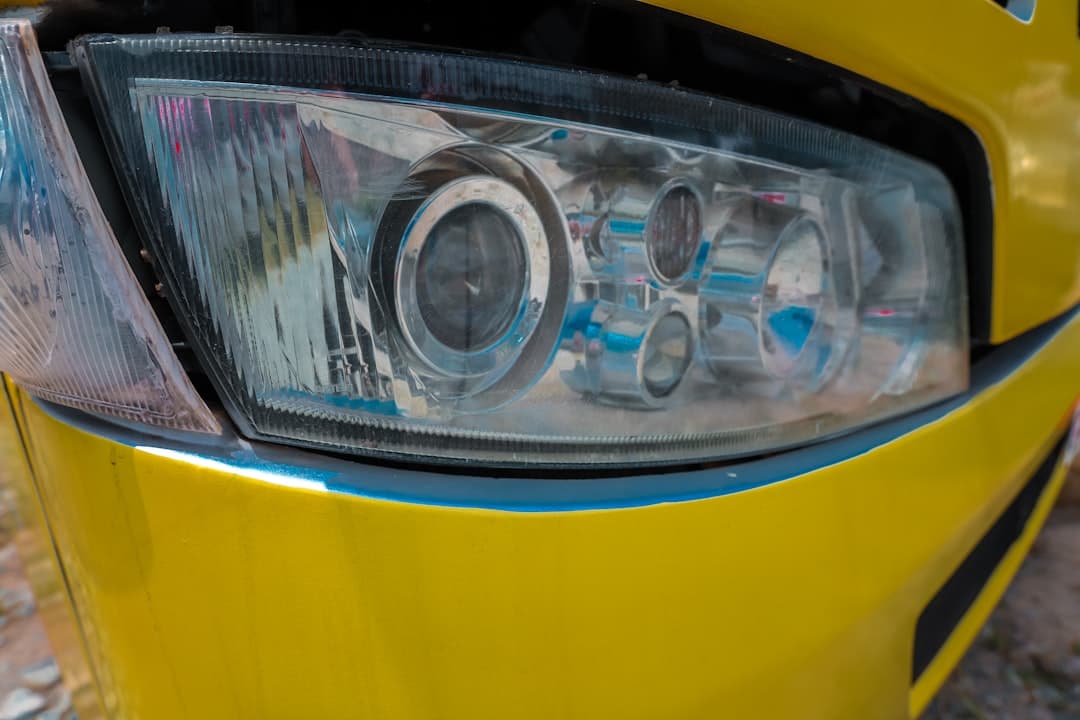
Smoked Headlights Are Illegal in All 50 States — Here's Why the Charts Say Otherwise
Updated August 2026 — we re-verified this article against the lamp statute in all 50 states, and the finding was stronger than the one we originally published. An earlier version said 36 states prohibit headlight tint while 14 allow or conditionally allow it. That breakdown was wrong, and this update explains where it came from.
The murdered-out look is the most popular finishing touch in car culture, and smoked headlight film is the cheapest way to get it. It's also, as far as we can determine from the actual statutes, illegal in every state in the country.
That's a stronger claim than most guides make, so here's the reasoning.
The rule is the same everywhere, even though the wording differs
Every state's vehicle code contains two requirements that predate the tint trend by decades:
- Headlights must emit white light and make objects visible at a set distance — usually 200 to 350 feet.
- Taillights must show red, plainly visible at a set distance — usually 500 or 1,000 feet.
Smoked film violates these by definition. It exists to reduce light output and alter apparent color; that's the entire point of the product. There's no threshold below which "a little" tint stops being a reduction — it just becomes harder to prove roadside.
So while only a handful of states name tint film explicitly, all fifty prohibit its effect.
Three states that say it outright
A few legislatures skipped the inference and wrote the ban into the text:
- Montana (MCA § 61-9-203) makes it unlawful to operate with headlamps "composed of, covered by, or treated with" tinted or colored material that obscures visibility — with an express carve-out only for tint that was factory standard or optional equipment.
- Wisconsin (Wis. Stat. § 347.13(1)) is equally direct: no tail lamp may have "any type of decorative covering that restricts the amount of light emitted," excepting only coverings fitted at manufacture.
- Georgia (O.C.G.A. § 40-8-22) states that headlights "shall not be covered by any type of material" unless the cover was factory-installed.
Pennsylvania deserves a mention too: its inspection rule (67 Pa. Code § 175.66(g)) rejects any lamp obstructed by a device that obscures, changes the color of, or obstructs the beam — which is as close to naming the product as a regulation gets.
Where the "some states allow it" myth comes from
Two sources, both traceable:
Invented candlepower minimums. Guides commonly claim Arizona permits tinted headlights as long as they maintain "24,000 candlepower," or that Colorado and Hawaii allow tint above some output threshold. We went looking for those numbers in the cited statutes. They aren't there. Arizona's lamp sections set color and glare rules, not a candlepower floor for tinted lamps. The figure appears to have been invented and then copied between sites.
"No statute found" mistaken for "allowed." Several state guides list North Dakota, Rhode Island, South Dakota, Vermont, West Virginia, and Wyoming as having no headlight-tint law. All six have perfectly ordinary lamp statutes — the researcher just didn't locate them. Absence of a tint-specific statute is not permission; the general lamp requirement still governs.
What this means practically
- Enforcement varies wildly even though the law doesn't. In inspection states (Pennsylvania, Massachusetts, Maine, Vermont, New York), tinted lamps fail annually. In non-inspection states you're relying on not being noticed, which is a different thing from being legal.
- "DOT approved" film is marketing. No film carries a federal approval that overrides a state's light-output requirement. FMVSS 108 governs the lamp as manufactured.
- Insurance and liability are the real exposure. If you're in a nighttime rear-end collision with tinted taillights, the modification becomes evidence — and that costs considerably more than a fix-it ticket.
- The legal alternative actually looks better. Clear paint protection film or a headlight restoration kit gives you the crisp, finished look without cutting output. On older cars, restoring hazed lenses does more for the front end's appearance than smoking them ever did.
See how all fifty states compare on the headlight tint comparison.
Want the exact lamp requirements and statute citation for your state — including the visibility distances an officer would measure against? Look up your state — it's free.
This article is for informational purposes only and is not legal advice. Every claim above was verified against primary statute text in August 2026. Laws change — verify with local authorities before you build.