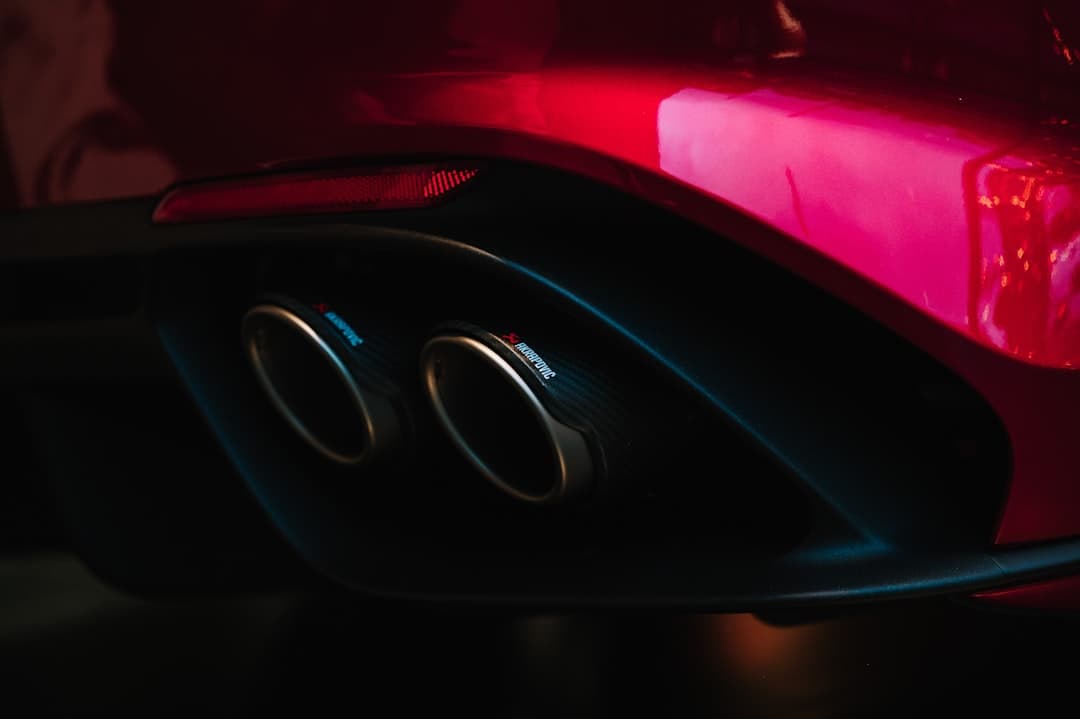
Aftermarket Exhaust: Every State Requires a Muffler, Almost None Set a Decibel Limit
Updated August 2026 — we re-verified this article against the exhaust statute in all 50 states. An earlier version repeated a widely-copied claim that California, Colorado, Florida, and Georgia share a 95-decibel limit. Only three states in the country use that number, and Colorado and Georgia have no numeric limit at all. The corrections are below.
The rumble of a well-tuned exhaust system is music to many enthusiasts' ears. But while that aggressive growl might sound like freedom, the legal landscape tells a different story. Not one state offers unrestricted freedom — every state in the country requires a functioning muffler and bans cutouts — so the whole country operates under a "conditional yes" that trips up even experienced modders.
What Exactly Is Aftermarket Exhaust?
An aftermarket exhaust system replaces or modifies your vehicle's factory exhaust components. This can range from a simple muffler swap to a complete cat-back or turbo-back system that replaces everything from the catalytic converter to the tailpipe. The most common modifications include:
Cat-back systems: Replace components from the catalytic converter back to the tailpipes Axle-back systems: Modify only the rear portion of the exhaust system Header/manifold upgrades: Replace the exhaust manifold or headers Muffler deletes: Remove the muffler entirely for maximum sound Resonator modifications: Add or remove resonators to tune sound frequency
Why Enthusiasts Choose Aftermarket Exhaust
The appeal goes far beyond just making noise. Performance enthusiasts chase aftermarket exhaust for several compelling reasons:
Performance gains: Reducing exhaust restriction can unlock horsepower and torque, especially on turbocharged or modified engines. A well-designed system can improve exhaust flow, reducing backpressure that robs power.
Sound customization: Factory exhausts prioritize quiet operation, but enthusiasts often want to hear their engine's character. Different muffler designs, resonator configurations, and pipe diameters create distinct sound profiles.
Weight reduction: Aftermarket systems often use lighter materials than factory components, contributing to overall weight savings.
Aesthetic appeal: Custom exhaust tips and visible components can enhance a vehicle's appearance, especially on sports cars and trucks.
Engine breathing: On modified engines, upgraded exhaust systems complement other performance modifications like cold air intakes and engine tuning.
The Great Conditional Compromise
Here's the real picture: all 50 states land between an outright ban and complete freedom. Every one requires a functioning muffler and prohibits cutouts or bypasses. The conditional part revolves around two factors: noise and emissions equipment.
The Decibel Dilemma
This is where most guides — including an earlier version of this one — go wrong. Most states set no decibel number at all. Their law is qualitative: a muffler in good working order, no "excessive or unusual noise."
The 95 dB figure that gets quoted everywhere is real law in exactly three states — California (Cal. Veh. Code § 27151), Montana (MCA § 61-9-435), and Tennessee (§ 55-9-202). Colorado and Georgia, routinely listed alongside them, have no numeric limit whatsoever. The other states that publish numbers mostly use different ones, measured a different way:
- Florida — 50-foot limits tiered by class and speed zone, reported between 72 and 86 dBA for cars (§ 316.293)
- Pennsylvania — 76–92 dBA at 50 feet by class and speed (67 Pa. Code § 157.11)
- Oregon — 94 dBA pre-1976, 91 dBA 1976 and newer, tested stationary at 25 feet (ORS 815.250)
- Nevada — 76 dBA where the speed limit is 35 mph or under, 82 dBA above it, at 50 feet (NAC 484D.150)
- Washington — in-use limits of 72–90 dBA at 50 feet
We cover this in more depth in The 95-Decibel Myth.
The practical challenge is unchanged: in a qualitative state, the officer's judgment is the standard, and a 90 dB exhaust that sounds aggressive can still earn a citation.
The Emissions Equipment Requirement
The other major conditional requirement centers on maintaining emissions equipment. Arkansas exemplifies this approach, requiring vehicles to "maintain factory exhaust systems including mufflers and catalytic converters." This means you can modify your exhaust, but removing cats or other emissions components crosses the line.
This creates interesting scenarios for enthusiasts. You might install a beautiful cat-back system that sounds incredible and gains 15 horsepower, only to fail inspection because it's slightly too loud or because a downstream oxygen sensor isn't properly positioned.
State-by-State Reality Check
The variations between states reveal how complex this landscape really is. Alabama requires mufflers but allows modifications as long as they're not "excessively loud" – subjective language that leaves interpretation to individual officers. Alaska takes a more technical approach, specifically requiring "proper muffling" while maintaining "emission control equipment."
Arizona mirrors many western states with functional muffler requirements and noise prohibitions, while Connecticut focuses heavily on emissions compliance. Delaware keeps it simple: mufflers required, excessive noise prohibited, emissions equipment maintained.
Want the complete picture? Our 50-state comparison breaks down every state's specific requirements and restrictions.
Common Mistakes That Cost Money
Assuming louder equals better performance: Many enthusiasts equate volume with power gains, but optimal exhaust design balances flow, scavenging, and back-pressure. Sometimes a quieter system actually performs better.
Ignoring local enforcement: Even in states with lenient laws, local municipalities might have stricter noise ordinances. Urban areas often crack down harder than rural counties.
Forgetting about inspections: Annual safety and emissions inspections can catch modifications that daily driving doesn't reveal. Some states specifically check exhaust modifications during inspection.
Removing emissions equipment: Cat deletes might sound amazing, but they're federally illegal and will cause inspection failures in most states. The National Highway Traffic Safety Administration takes emissions tampering seriously.
Not considering resale impact: Heavily modified exhaust systems can complicate vehicle sales, especially if they don't meet the buyer's state requirements.
Smart Shopping Strategies
When selecting aftermarket exhaust, research pays dividends. Look for systems specifically designed for your vehicle that maintain factory mounting points and emissions equipment positioning. Many reputable manufacturers design systems to meet common state requirements while maximizing performance and sound.
Consider modular systems that allow future changes. Some manufacturers offer interchangeable muffler sections or removable resonators, letting you tune sound and compliance as needed.
Sound clips and decibel ratings from manufacturers provide valuable guidance, though real-world results vary based on your specific vehicle configuration and local measurement techniques.
Professional installation often includes compliance advice from experienced shops familiar with local requirements. They've seen which systems pass inspections and which cause problems.
The Federal Factor
Remember that state laws interact with federal regulations. The Environmental Protection Agency regulates emissions equipment, making catalytic converter removal federally illegal regardless of state laws. This creates a floor below which no state can legally go, explaining why even the most permissive states typically require maintaining emissions components.
Compare every state side by side on the aftermarket exhaust and exhaust noise pages.
Want the exact statute citations? Our compliance report has the full legal breakdown.
Looking Forward
The aftermarket exhaust landscape continues evolving as states balance enthusiast freedoms with noise and emissions concerns. Electric vehicle adoption may eventually reduce these concerns, but internal combustion modifications remain relevant for millions of enthusiasts.
Understanding your local requirements before purchasing prevents expensive mistakes and legal headaches. Whether you're chasing maximum performance or just want your daily driver to sound more engaging, working within your state's conditional framework keeps you on the right side of the law while achieving your modification goals.
The sound and fury of aftermarket exhaust doesn't have to signify legal trouble – it just requires doing your homework first.
Every figure in this guide was verified against primary sources — statute text, administrative code, and state inspection manuals — in August 2026. Laws change and local ordinances may add requirements beyond state law, so verify with local authorities before modifying your vehicle. This is not legal advice.